
Events
By Shingirai Mazambani
In April this year, the Zimnat Group participated at the annual Zimbabwe International Trade Fair held from the 22nd to the 28th of April 2019 under the theme ‘Propagating Industrial Growth through Trade and Investment.
The exhibition, which was the 1st for the Zimnat Group, saw a number of customers visiting the stand to interact with the brand, understand more about the products and services on offer as well for sign up’s.
Visitors also got an opportunity to interact with the Bulawayo Team which was manning the stand from the different business units within the group.
Activities that took place at the stand included a daily quiz, with winners able to pop a balloon to find out what prize they had won, and a ‘sign up and win’ promotion where customers who signed up for an insurance policy at the stand walked away with a Zimnat branded gift.
There were also Zimnat branded gifts for those who referred the person signing up for a policy.
There was a Zimnat virtual reality showroom, to give potential customers an idea of what to expect at a Zimnat office.
Those who needed to renew their motor vehicle insurance and license their vehicles were able to do so, through an automatic vehicle licensing machine.
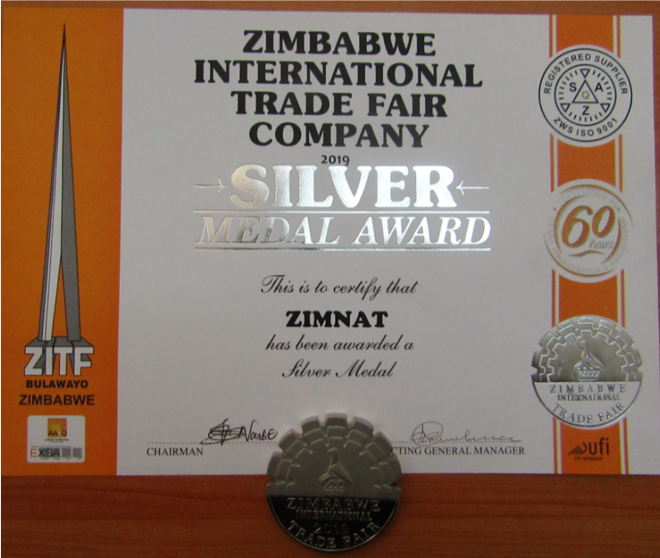
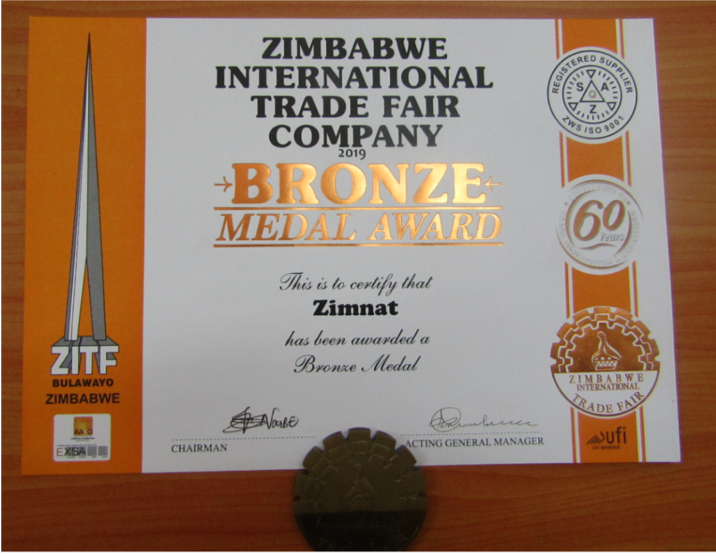
The exhibition, saw Zimnat walking away with two awards; a silver medal in the ‘Best Zimbabwean Medical Aid and Related Exhibit and a bronze medal for the Best Zimbabwean Motor Trade Exhibit.
“I think we can feel proud of the fact that we came second in one category and third in another even though we had never exhibited at the trade fair before,” commented Zimnat Group Marketing Executive Angela Mpala, in an interview.
“Even more important for us than the awards we won was the interaction we were able to have with our customers and potential customers, who flocked to the stand to learn more about the products and services we offer, to renew or take out policies or to take part in the competitions taking place there,” she said.
The participation at the years’ ZITF was inspired by the desire to make lives better and to interact with customers and potential customers attending it. Below are some of the pictures of the stand and the customers who interacted with the Zimnat Team.
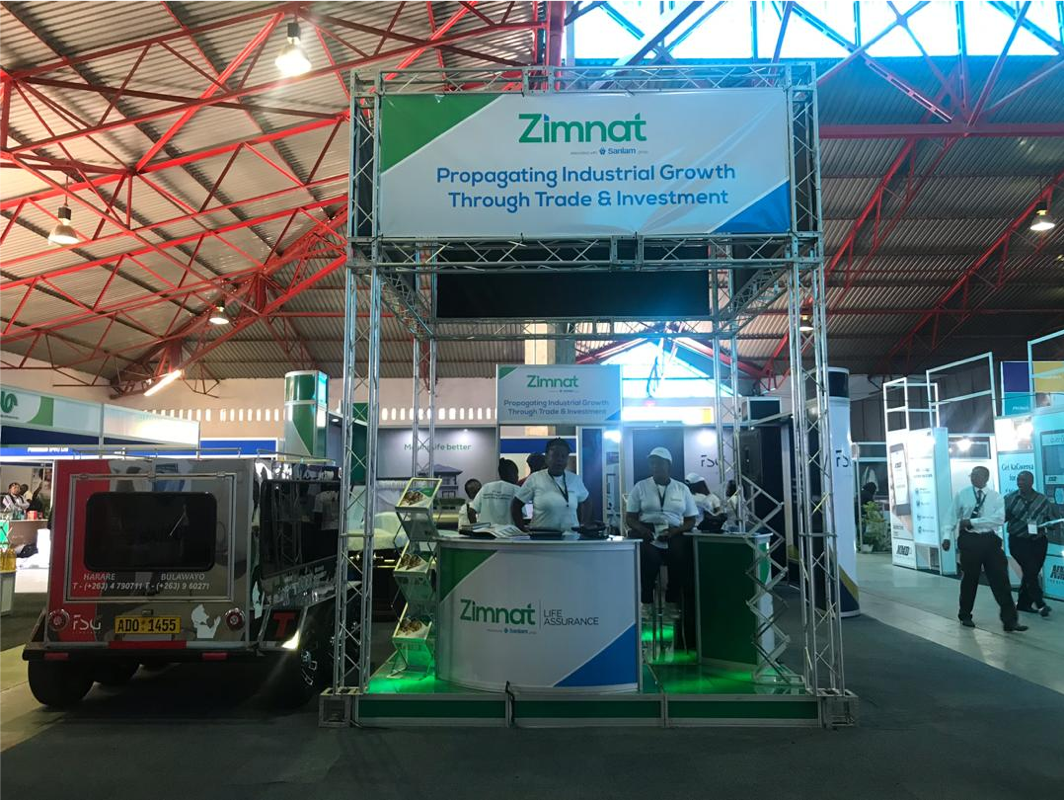
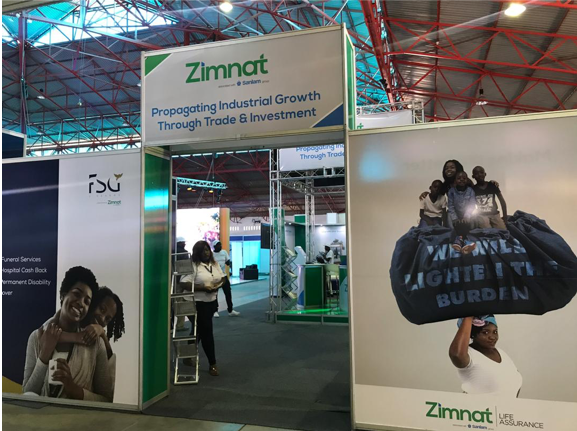


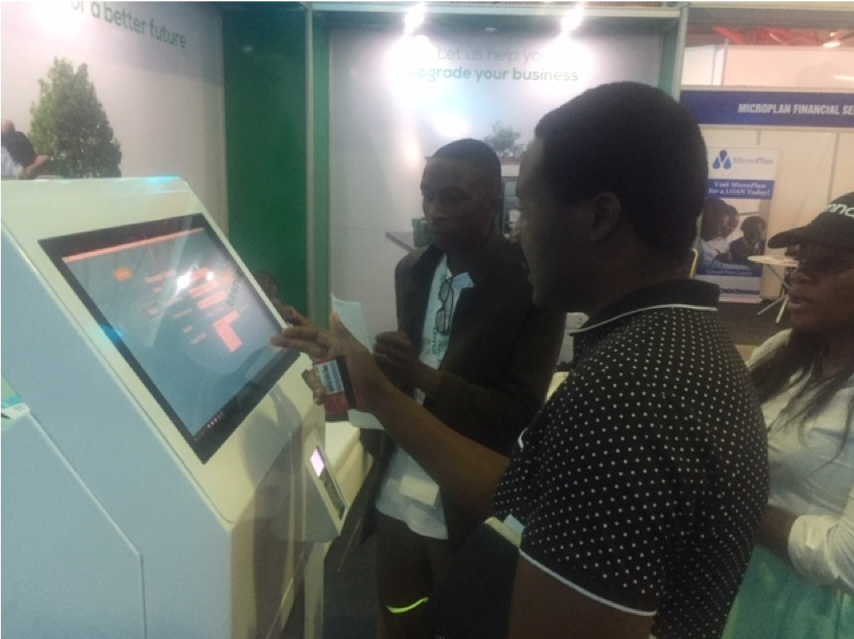
ADMA
The Zimnat group in partnership with THI, also participated at the recently held Agricultural Dealers and Manufacturers Association (ADMA) Agrishow. The show, attracted manufacturers and dealers of farming equipment as well as other companies that offer products and services to the agricultural sector.
Among the large exhibits that were there was a 20 metre 30 tonne mobile agricultural laboratory designed to provide agricultural laboratory services in rural areas. The impressive laboratory was stationed at the Zimnat/THI Insurance stand.
The two companies showcased the mobile laboratory, in partnership with Santam Agriculture, a subsidiary of Sanlam. The laboratory which is well equipped, is predominantly run with solar power and includes a training room, which can be used for training groups of farmers and to introduce agriculture science to youths in remote areas. If the group is too large for the training room, those outside the truck can follow proceedings in the training room on two high definition televisions screens.
One of the main purposes of the mobile laboratory is to enable farmers to have soil and water tests done close to where they are, so they do not have to travel long distances to have such samples analysed. An analysis of soil samples is important for deciding on what fertiliser to use.
In an interview, Zimnat General Insurance Chief Executive Officer Stanley Mazorodze says the laboratory is intended not only to enable emerging farming businesses to do soil and water analysis but also to introduce technology to rural schoolchildren.
“The mobile laboratory enables us to bring appropriate technology to the field where it is needed most,” he said.
The Zimnat/THI stand also had a rural feel to it, with bales of straw being used as seats. Below are some of the pictures of the exhibition.


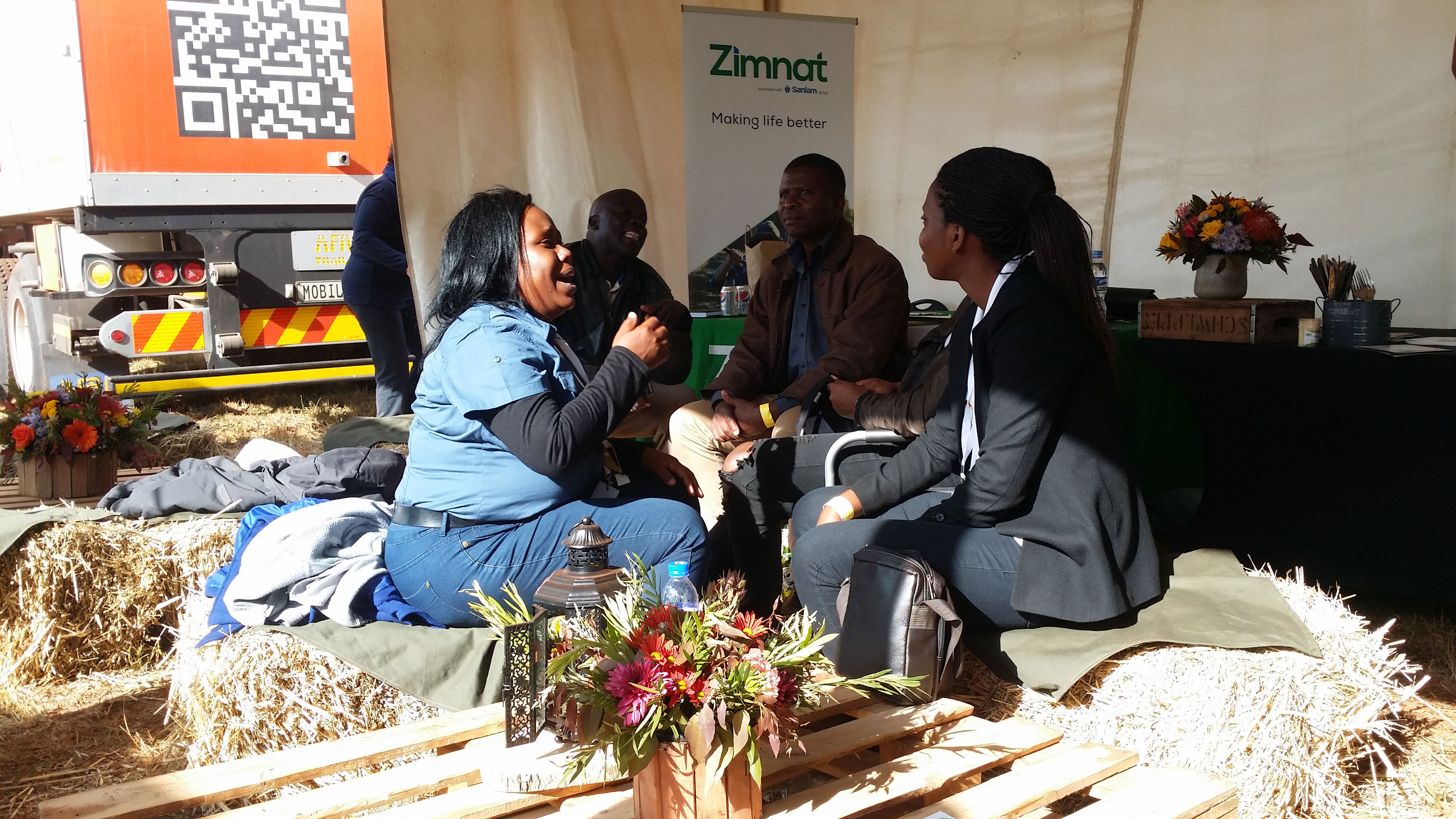
Awards
In Q2, we celebrated 2 awards awarded at the 2019 Zimbabwe International Trade Fair
- Best Zimbabwean Medical Aid and Related Exhibit
- Bronze medal for the Best Zimbabwean Motor Trade Exhibit awarded at the 2019 Zimbabwe International Trade Fair
We were also awarded for the second time in a row for ‘Winner in the Short Term Insurance Top Companies Survey’
Congratulations to the team and may we keep the Zimnat flag flying high!
-End-


Zimnat innovating funding options for Zimbabwean businesses
By Taurai Craig Museka
As Zimbabwe looks to map its way to economic recovery with the aim to realise a better balance of payments, export development initiatives have become a priority for both the government and private sector. Zimnat is on an innovation drive to develop insurance products that can assist businesses that have for long struggled to grow their manufacturing base and export markets. With the new products Zimnat hopes to obviate some of the obstacles to development resulting from the lack of funding and working capital.
Businesses operating in any struggling economy are exposed to the harsh reality of limited access to funding, in such fluid environments risk mitigation measures take precedence amongst investors and banks. This desire to reduce risk usually outweighs the appetite for profits on the money therefore making it difficult for businesses to get funding necessary for capacitation to meet export demand. Contrary to developed nations where Export Credit Agencies (ECAs) are given a task by governments to support development of exports through provision of export financing and various insurance and guarantees, Zimnat has taken the task to strengthen the export position of domestic companies. Through the provision of insurance, guarantees and partnerships with various funders Zimnat is able to make life better for all its stakeholders both individual and legal entities.
The foreign currency constraints in Zimbabwe are leaving many businesses with the difficult task of sourcing for funds to pay for their foreign currency obligations to settle input costs. Through the Trade Credit Insurance Division, Zimnat is assisting businesses in entering into more foreign markets, which would normally be difficult or risky to venture into. As an organisation that is associated with Africa’s largest non-banking financial services provider (Sanlam), Zimnat has a rich market intelligence pool on global markets that can assist any business without fear of defaults on exports. Furthermore Zimnat offers export trade credit insurance policies that compensate businesses in the event that the producer’s clients both local and international default payment for goods sold on credit terms.
The goal of any business in any difficult environment is cost containment. Zimnat Trade Credit Insurance policies do not just compensate businesses in the event of a default by their debtors, the policies also offer cost minimisation through reduction of the bad debt reserves. The policy allows the exporting business to share the cost of market vetting with Zimnat to ensure that business minimise their costs and be cost competitive internationally. Zimnat also eliminates the need for hiring lawyers or debt collectors in the event of a default by a debtor, as they take over the credit management and debt collection function at no extra cost.
With the aid of partnerships with strong financial backing, Zimnat is able to provide comfort to trade financiers by making available invoice-discounting arrangements that are also known as factoring. Such arrangements make life better for most Zimbabwean businesses which have low credit ratings, which make it difficult to access funds from banks. Businesses are able to turn what would have otherwise been a credit sale into a cash-upfront sale through invoice discounting. A business can wait for 30 days on a credit sale and risk the loss of value through inflation on a sale made, they receive cash up front by opting to have their invoices discounted by Zimnat. Through the trade credit insurance Zimnat has essentially made it easier for businesses to have funding necessary for restocking. The insurance policy will essentially cover the financier from the risk of losing money when a debtor defaults after the 30 days or the terms of the invoice have ended.
As lending standards get increasingly tighter due to an increase in non-performing loans, Zimnat is encouraging private lenders to provide funding for small, medium and large businesses through the issuance of various credit guarantees. Zimnat will guarantee repayment of borrowed amounts in case the businesses default. Businesses without a credit history or collateral are able to secure funding using guarantees provided by Zimnat. Other guarantees issued by Zimnat have also made it possible for businesses particularly in manufacturing, agriculture, construction and mining to upgrade their equipment, machinery and infrastructure.
-End-
Economic Highlights

By Tatenda Makoni
The second quarter of the year saw a lot of changes on the monetary policy front which were building up on SI33/2019 which removed the fixed 1:1 exchange rate between the USD and the RTGS dollar and an opening of an official interbank exchange rate at 1:2.5 to the USD. However, the parallel market exchange rate continued to deteriorate opening the 2nd quarter at 1:4 to the US dollar and trading at 1:10 by mid-June 2019. Prices soon caught up driven by the cost push inflation as there was limited availability of forex on the interbank market and official annual inflation reached an all-time post dollarisation high of 98%, just a few points away from the hyper-inflationary mark of 100%.
The Zimbabwean government entered into an IMF Staff Monitored Program in which the IMF would assist government with technical advice on tackling market distortions e.g. subsidies, fuel arbitrage, and improving the efficiency of the formal forex market. The program is to run between May 2019 and March 2020. On 20 May 2019, there was the removal of the 1:1 exchange rate for fuel procurements as government moved to stem arbitrage opportunities and loopholes which were helping to sustain the parallel market. Fuel prices increased from $3.36 and $3.22 for petrol and diesel respectively to $4.97 and $4.89 and going forward, the RBZ directed that procurement of fuel by the Oil Marketing Companies (OMCs) was to be done through the interbank foreign exchange market. As the foreign exchange rates continue to deteriorate, it is not clear at this juncture how much of that increase will be passed on to consumers. The energy sector has been highly regulated by the government. Zimbabwe Electricity Transmission and Distribution Company (ZETDC) struggles to meet demand at current tariffs. Although current energy prices are unsustainable for providers, an increase would undoubtable stoke inflation.
The increase in fuel prices and subsequently inflation was not met by a corresponding increase in wages. The result was a serious erosion in the purchasing power of consumers and a cry to be compensated in USD wages and salaries as almost all commodities were now pegged to the USD. The response from the authorities was the removal of the multi-currency system and an enforcement of the Zimbabwe dollar as the legal tender in the country via SI142/2019 on 24 June 2019. The statutory instrument was intended not only to limit local forex demand for local transactions, but also to channel hard currency towards the formal system. There was further liberation of the forex market through removal of 2.5% limit on margin of movement for exchange trades at the interbank market and allowing a fully market driven market.
In 2018, the country produced record 252 million kilograms of flue-cured tobacco, generating at least US$1 billion in foreign currency earnings. However, the 2018/19 season has been below par because of the change in payment modalities (part payment in local currency) and partly due to unfavourable weather conditions. In its June 2019 report, the Zimbabwe Tobacco Association said early indications were that tobacco production and US dollar earnings from tobacco in the 2018/19 season would decline compared to prior year. As at 12 June 2019, deliveries were down 11% in volume at 171.2 million kilograms. The average price mid-June was US$1.85/kg, against US$2.87/kg a year ago.
The country racked in US$3, 2 billion from mineral exports in 2018, of which US$1, 1 billion was from gold. The experience for 2019 is likely to fall below expectations given the declining deliveries to Fidelity Printers which in the five months to May dropped by 20% to 10.8tonnes from 13.59tonnes in the same period last year. Gold miners are compelled by exchange control regulations to surrender 45% of their export proceeds to the Reserve Bank of Zimbabwe (RBZ) and this low retention level has negative impacts on the mines ability to meet its working capital requirements and encourages deliveries to be made outside the formal channels especially for small scale miners. In addition to foreign currency constraints, erratic supply of electricity is disrupting production.
Looking ahead, the cost of living in Zimbabwe is likely to remain pegged to the US dollar and the prevailing exchange rate. Whether or not the exchange will stabilise is difficult to predict at this point. Key variables in the economic equation include, overall confidence in the local currency, fiscal and monetary discipline by government, political reforms and doing business reforms, to name a few, all of which are important factors determining the success or failure of the resurrected Zimbabwe Dollar.
-End-